





Wildfire prevention, aging grid infrastructure and expensive peak-hour pricing are putting pressure on California electric bills. Here's how homeowners can combine smarter electricity use, CARE and FERA discounts, home efficiency, solar and battery storage to evaluate real opportunities to save.

California homeowners can cut electricity consumption and still face substantial utility bills. Millions of households served by Pacific Gas and Electric (PG&E), Southern California Edison (SCE) and San Diego Gas & Electric (SDG&E) are affected by high electricity prices, tiered charges, Time-of-Use plans and investments in the state's grid.
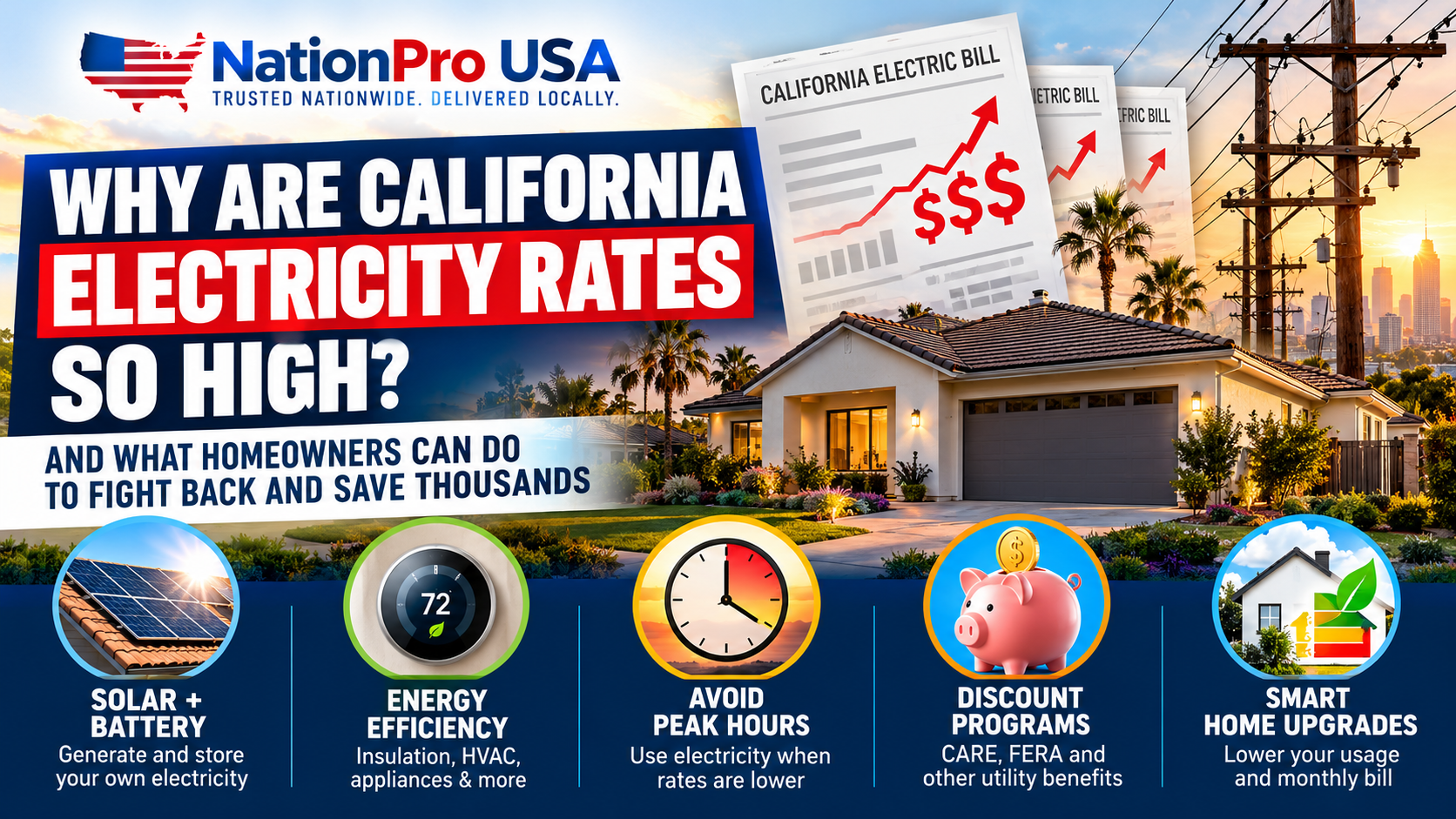
Why are California electricity rates so high? Major contributing factors include wildfire mitigation and liability, electricity infrastructure and grid investments, utility operating and financing costs, and the way rates are structured across peak and off-peak hours. No single expense explains every customer's bill.
Fortunately, homeowners can evaluate several approaches: reduce the electricity a home needs, use power during less expensive periods, apply for qualifying utility assistance and consider solar or battery storage where the numbers make sense.
Why California Electricity Rates Continue to Rise
Wildfire prevention and utility liability
Wildfire prevention requires vegetation management, line inspections, covered conductors, undergrounding in selected areas and other grid-hardening measures. Utility-related wildfire damage can also generate claims, litigation and insurance expenses. Regulators review which costs utilities are allowed to recover from customers.
The California Public Advocates Office reported in October 2026 that average residential electricity rates for customers of the three large investor-owned utilities increased approximately 70%–100% over the preceding decade, with wildfire mitigation and liability among major cost drivers. Historical increases do not guarantee future rate increases.
Aging equipment and grid modernization
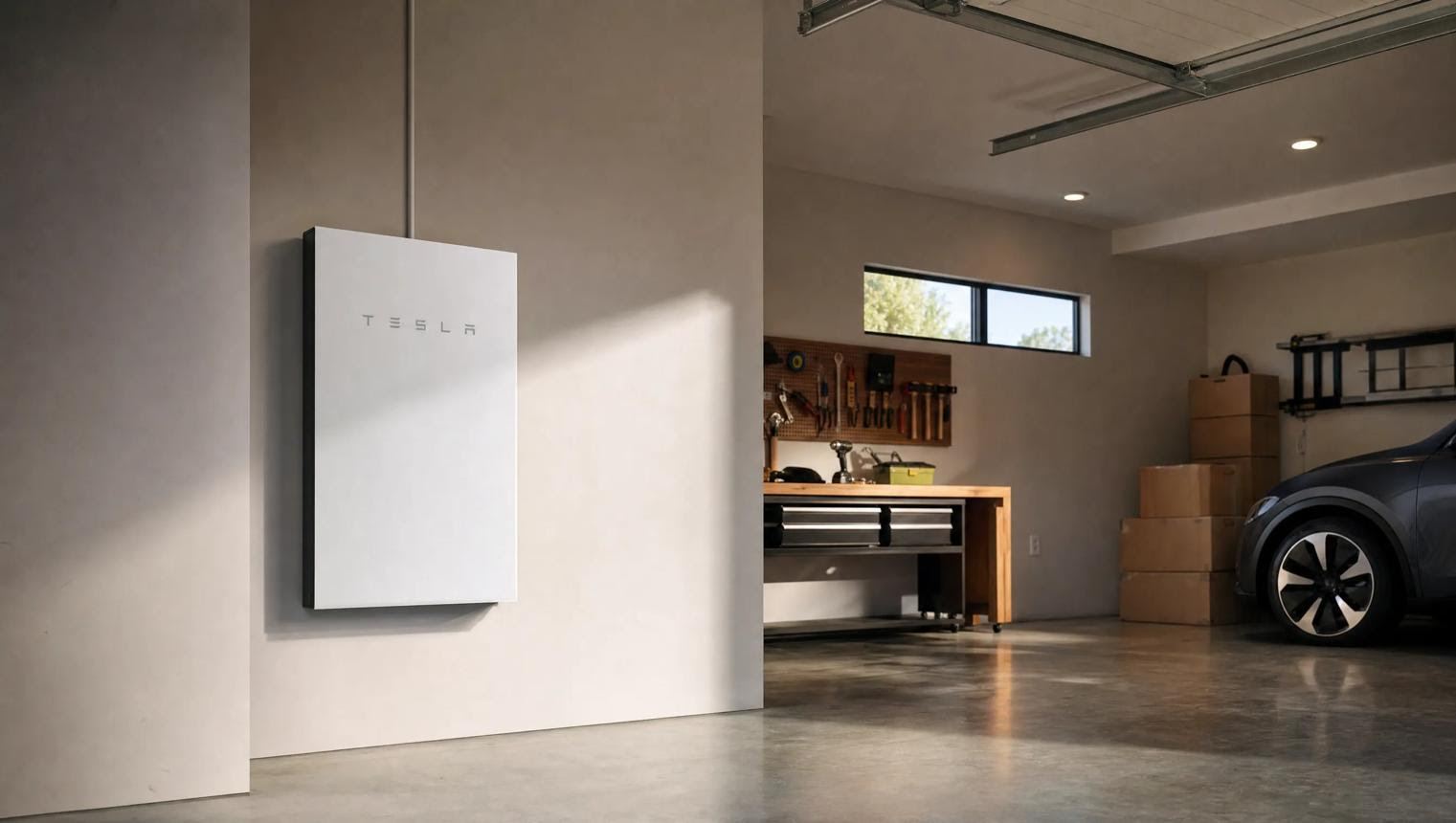
Power lines, substations, transformers and distribution equipment require maintenance and replacement. Utilities also invest in reliability, severe-weather resilience and capacity upgrades as homes add electric vehicles, heat pumps and other large electrical loads.
Insurance, financing and regulation
Utilities also pay for insurance, financing, routine operations, safety programs and regulated investments. The California Public Utilities Commission reviews the costs and authorizes rates under applicable procedures. A homeowner's bill reflects the rate plan, usage and approved charges—not wildfire expenses alone.
Important: A percentage of a utility's wildfire-related authorized revenue requirement is not the percentage of a specific home's bill attributable to wildfires. For detailed analysis, see NationPro's California wildfire-costs and electricity-rates guide.
Why Peak Electricity Hours Can Be More Expensive
California demand often increases in late afternoon and early evening as air conditioning remains in use and people return home. On Time-of-Use (TOU) plans, the electricity price depends on the time, season and day of the week.
Those peak windows are confirmed on SCE's official TOU plan page. Exact prices and eligibility vary, and PG&E, SDG&E, Community Choice Aggregators and municipal utilities can use different schedules.
Illustration: If a household could shift 200 kWh each month from a hypothetical 50¢/kWh period to a 25¢/kWh period, the difference would be $50 per month, or $600 annually. These are example rates, not current SCE tariff quotes; not every household can shift this much electricity.
10 Ways California Homeowners Can Reduce Electricity Costs
Some opportunities are free changes in energy habits. Others require an investment or depend on an income-qualified program. The right sequence depends on the home's utility bill and priorities.
01 Install Solar Panels and Consider Battery Storage
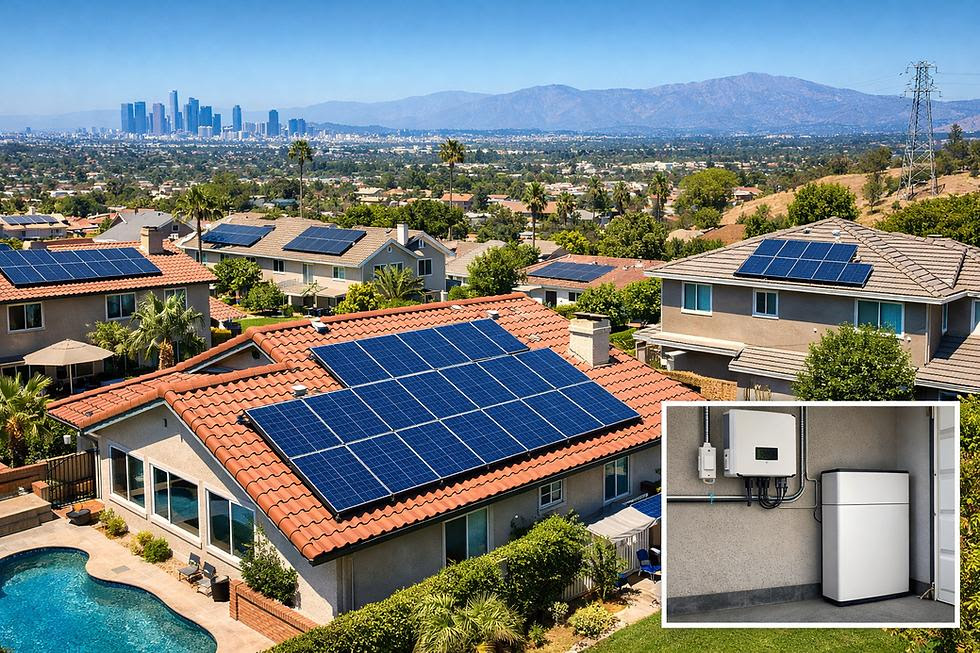
Rooftop solar produces electricity during daylight and can reduce electricity purchased from the grid. A compatible battery can store available solar electricity for later use, including selected high-priced periods. When correctly configured for backup, batteries can also power supported circuits during an outage.
Under California's Net Billing Tariff, qualifying new PG&E, SCE and SDG&E solar installations receive separate credit values for exported electricity. Battery economics depend on the full installed price, rate plan and how energy is actually used.
How home battery storage works with solar · Explore NationPro solar options.
02 Avoid Large Appliances During Peak-Rate Hours
Check your TOU schedule before using a dryer, dishwasher, pool pump or vehicle charger during expensive periods. Appliance timers can move flexible tasks to lower-priced hours when it is safe and practical.
Shifting usage saves money only when your tariff offers a meaningful price difference and the new schedule fits your household needs.
03 Improve Insulation and Seal Air Leaks
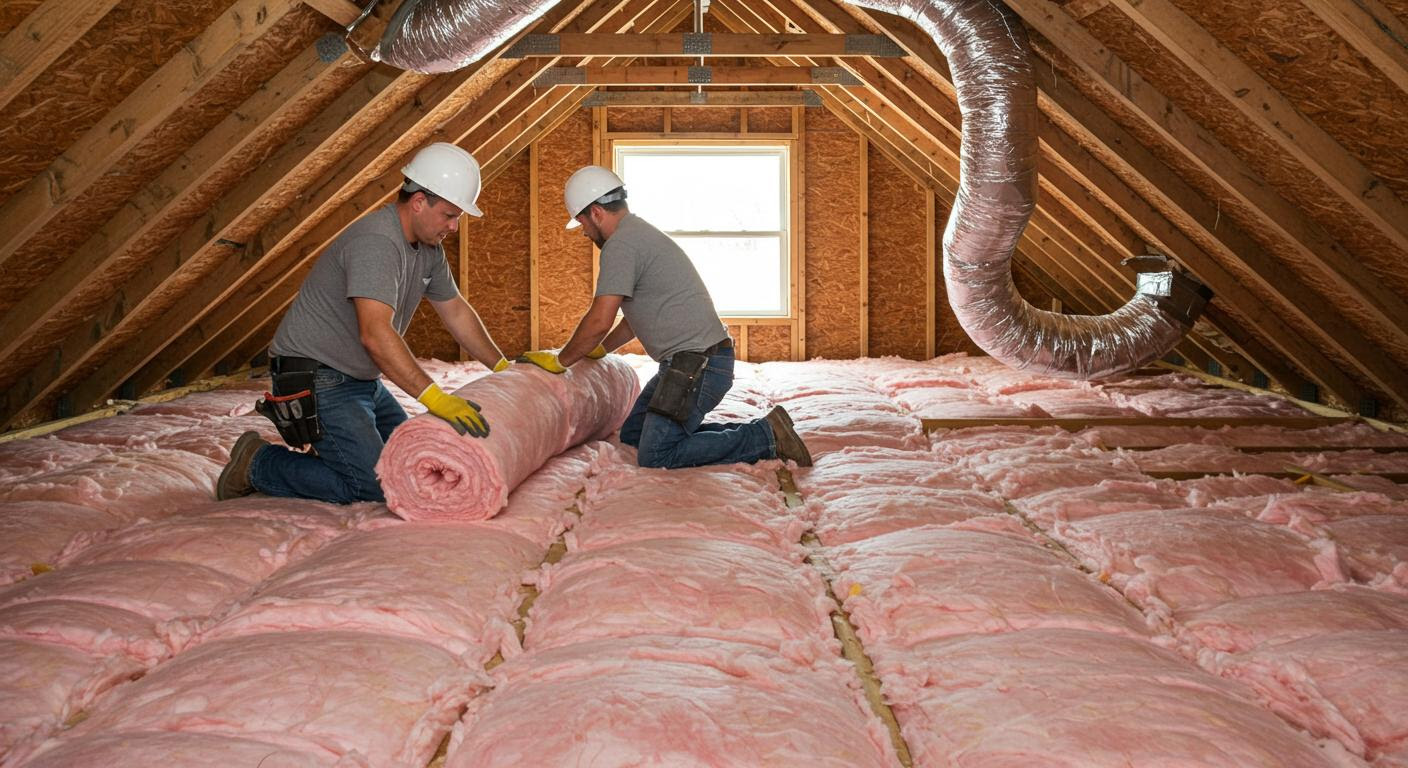
Gaps around windows, doors and attic penetrations allow conditioned air to escape. Weatherstripping, caulking, adequate attic insulation and duct sealing can reduce unnecessary heating and cooling demand.
Reducing electricity use before choosing a solar system may also reduce the generation capacity required. For a broader checklist, see NationPro's California home energy-efficiency guide.
04 Evaluate High-Efficiency Heat Pump HVAC
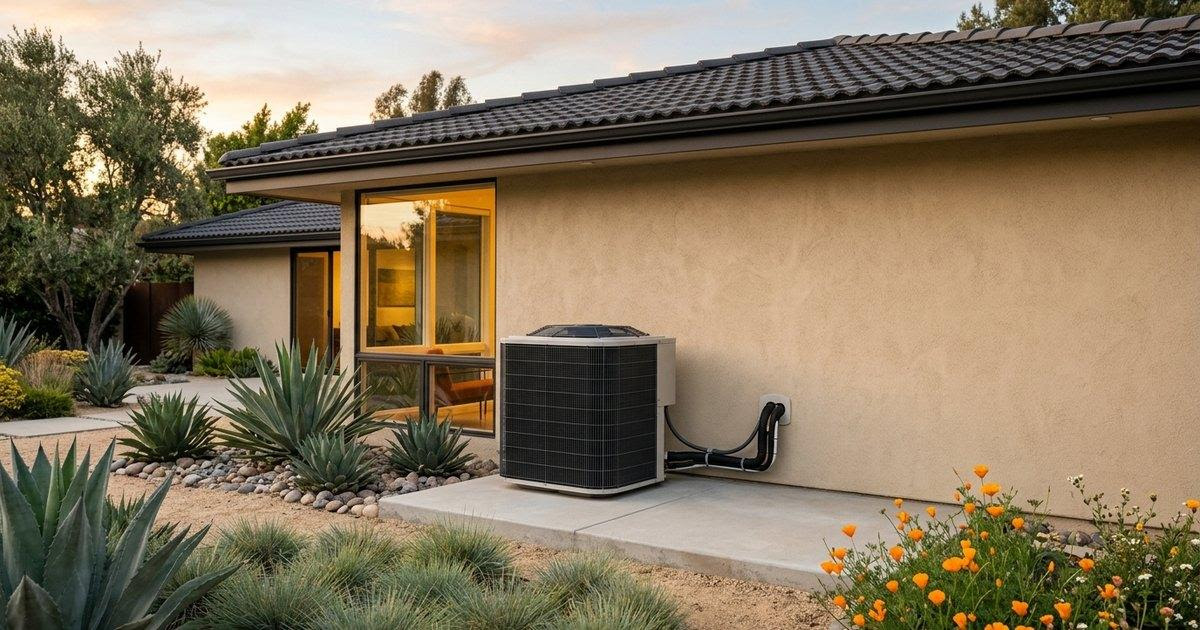
A correctly sized heat pump can provide both heating and cooling. Upgrading older HVAC equipment may lower heating or cooling energy use, depending on what it replaces; replacing gas heating with electric heating can increase electric use while reducing gas consumption.
2026 rebate status: California's HEEHRA single-family program historically advertised up to $8,000 for households below 80% of area median income, and up to $4,000 for those at 80%–150%. However, TECH Clean California reports new single-family reservations are no longer available, with funding fully reserved statewide. Check other current local/utility programs before assuming any incentive.
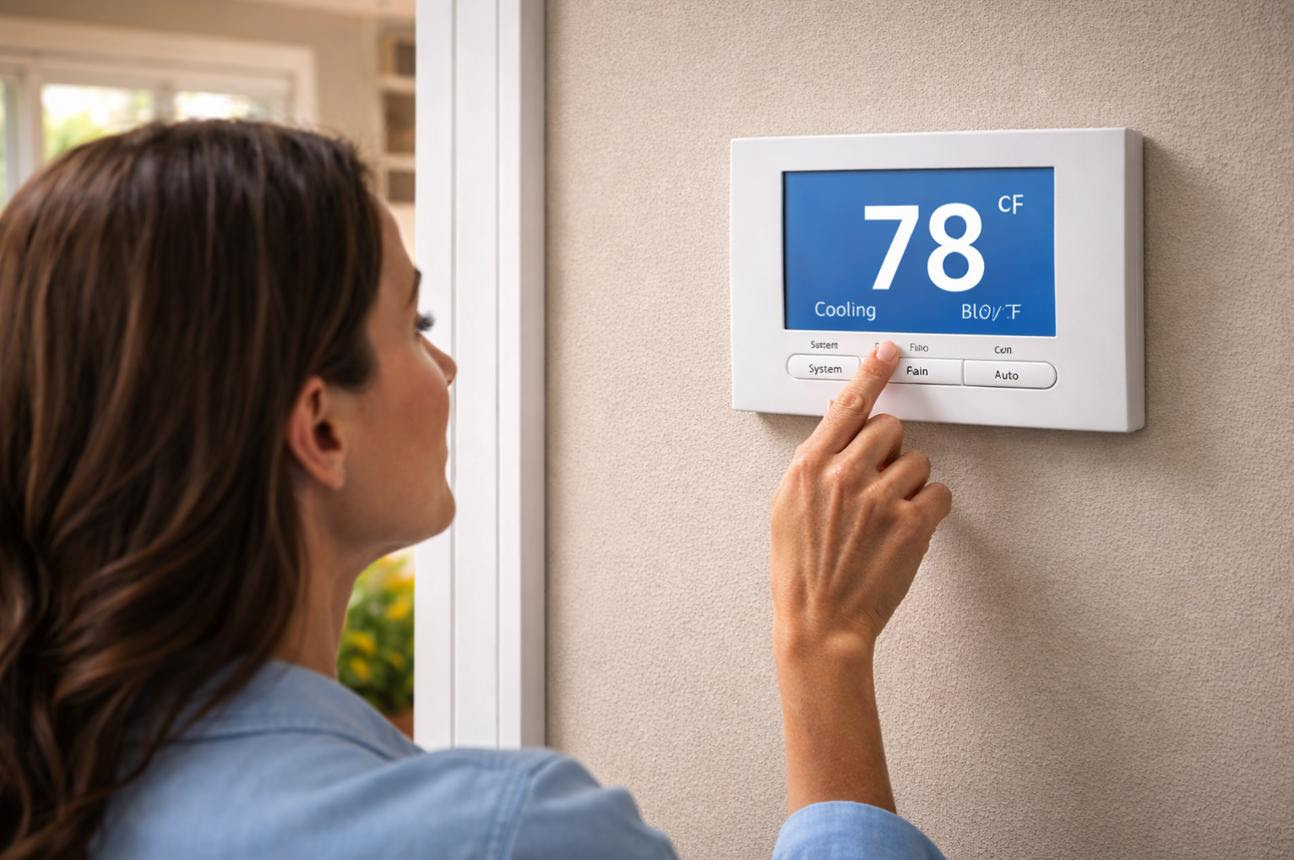
05 Install a Smart Thermostat and Manage Cooling Schedules
Schedule temperatures around occupancy and utility peak periods. ENERGY STAR-certified smart thermostats can adjust heating and cooling automatically; results depend on the home and existing thermostat practices.
Cooling before high-priced hours can sometimes reduce peak electricity purchases, but excessive precooling can increase total usage. During hot weather, prioritize health, comfort and any medically necessary cooling.
06 Replace Inefficient Appliances and Water Heaters
When equipment reaches replacement age, compare efficient refrigerators, LED lighting, washers, dryers and heat-pump water heaters. ENERGY STAR listings and local utility programs can help you review suitable options.
For homes replacing a natural-gas water heater with an electric unit, compare both gas and electricity costs; a lower electric bill alone is not the correct measure of savings.
07 Check CARE and FERA Utility Discounts
California Alternate Rates for Energy (CARE) generally offers a 30%–35% electric-bill discount for eligible large-utility customers. Family Electric Rate Assistance (FERA) offers an 18% electricity discount for qualifying PG&E, SCE and SDG&E households. Different base-service-charge provisions may apply.
Selected annual household-income limits (June 2026–May 2027):
| Household size | CARE maximum | FERA income range |
|---|---|---|
| 1–2 | $43,280 | $43,281–$54,100 |
| 3 | $54,640 | $54,641–$68,300 |
| 4 | $66,000 | $66,001–$82,500 |
| 5 | $77,360 | $77,361–$96,700 |
| 6 | $88,720 | $88,721–$110,900 |
Source: California Public Utilities Commission CARE/FERA guidance. Eligibility also depends on utility and program conditions. Municipal utilities such as LADWP and SMUD run separate assistance programs.
08 Apply for No-Cost Home Energy Efficiency Improvements
The Energy Savings Assistance (ESA) program can provide qualifying weatherization and efficiency services at no cost to eligible households. Depending on the property and utility, work may include weatherstripping, attic insulation, caulking or efficient appliances.
ESA has its own eligibility rules and requires a utility/program assessment. It is not a blanket offer of free upgrades to every homeowner.
09 Review Your Rate Plan, Medical Baseline and Climate Credits
Look at at least 12 months of bills and, where available, hourly usage data. A TOU plan that works well for an EV household may not suit someone who uses most of their electricity during peak hours. Check available utility comparison tools.
Eligible households may benefit from Medical Baseline allowances; many utility customers also receive California Climate Credits under applicable rules. These credits are not the same as permanent reductions in the underlying cost of electricity.
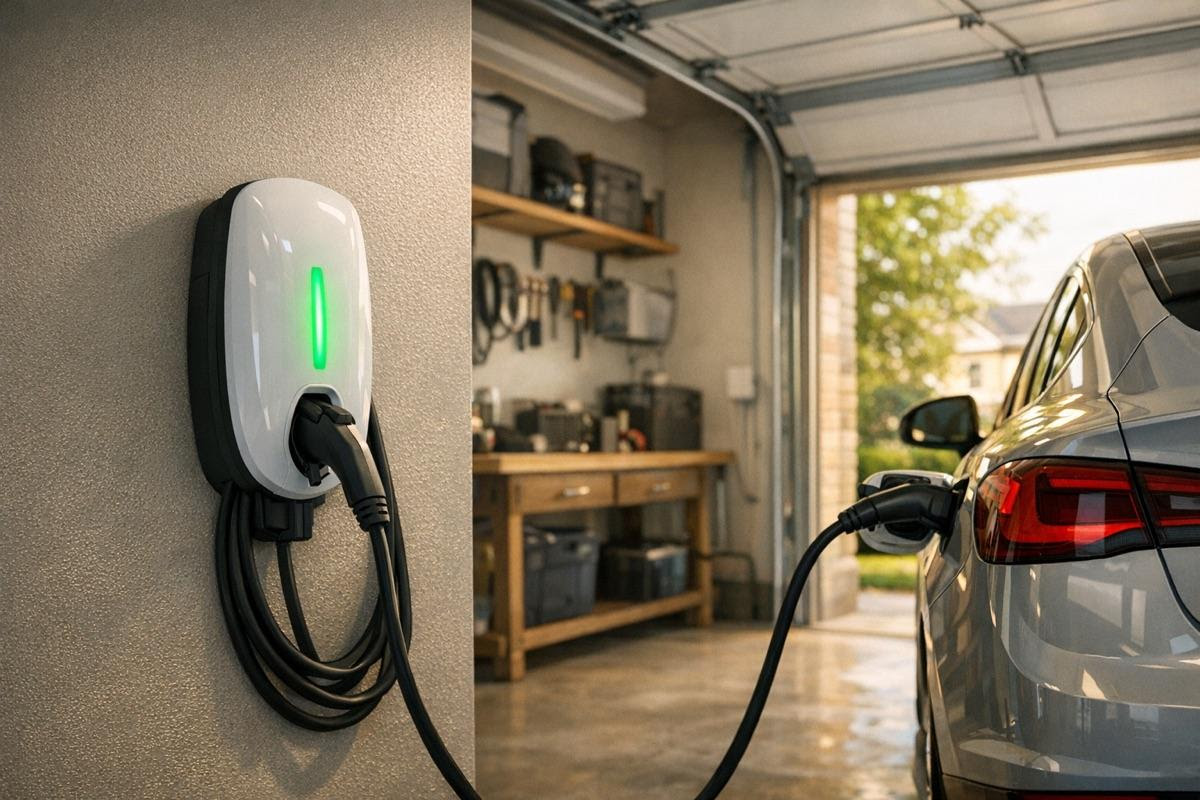
10 Charge Electric Vehicles During Lower-Cost Hours
An EV changes how much and when electricity is needed at home. Review utility EV plans, schedule overnight charging where it is cheaper, and consider charging when solar production is available if the car is at home during the day.
For a practical example, read NationPro's California solar and EV charging guide.
What Happens When You Combine Several Energy-Saving Strategies?
Efficiency measures may reduce total consumption. TOU scheduling may lower the price paid for some grid electricity. Solar and batteries may reduce additional grid purchases. However, savings may overlap, and equipment or financing costs also need to be counted.
Use the illustration below to see why the monthly net cost matters more than the utility-bill reduction alone. Enter your own assumptions to compare possibilities; this is not a proposal, bill model or guaranteed return.
Illustrative Monthly Electricity Cost Comparison
Values below are hypothetical, not current utility rates or a NationPro quote.
Assumes each improvement produces separate savings without overlap, that the equipment cost field includes all recurring project payments and that utility charges do not change. Real tariffs, costs, taxes, performance, contract terms and interactions between measures can make results substantially different. Upfront cash costs and maintenance are not modeled.
Why NationPro USA Recommends a Whole-Home Energy Strategy
The objective is not simply installing the most solar panels or the largest battery. It is choosing a practical combination of measures based on the home's actual usage, roof, insulation, HVAC equipment, peak-hour demand and future needs.
1. Reduce avoidable demand
Evaluate insulation, ducts, cooling performance, standby loads and appliance efficiency.
2. Match the utility plan
Compare TOU plans, energy use, assistance eligibility and available credits.
3. Size solar carefully
Use roof conditions, projected generation and actual demand rather than generic savings promises.
4. Add storage for a purpose
Compare evening-use and backup value against the battery's installed and financing costs.
NationPro's California electricity-rate and solar analysis provides more context on why utility prices remain part of the solar decision—even without the former federal homeowner tax credit. The IRS confirms Section 25D is unavailable for qualifying new residential solar and battery expenditures completed after 2025.
California Electricity Rates and Energy Savings FAQs
Why are California electricity rates so high?
Major factors include wildfire mitigation and liability, infrastructure and grid investment, operating and financing costs, and electricity rate structures. The effect on a specific bill depends on the utility, rate plan and household usage.
What are SCE's highest summer Time-of-Use hours?
SCE lists 4–9 p.m. on summer weekdays for TOU-D-4-9PM and 5–8 p.m. for TOU-D-5-8PM. Exact electricity prices, weekends and seasonal rules depend on the customer's plan.
How can I lower my California electric bill without solar?
Consider shifting flexible electricity use outside peak hours, improving insulation and air sealing, maintaining HVAC equipment, upgrading inefficient appliances, comparing rate plans and applying for CARE, FERA or ESA assistance if eligible.
What is the CARE discount in California?
CARE generally provides a 30%–35% electric-bill discount for qualifying customers of larger investor-owned utilities. Eligibility depends on household income or qualifying public assistance participation and the utility's program rules.
What is the FERA discount?
FERA offers an 18% electricity-bill discount for eligible PG&E, SCE and SDG&E households whose incomes are above CARE limits but within FERA's limits, subject to program rules.
Are California HEEHRA heat-pump rebates still available to new applicants in 2026?
TECH Clean California reports that single-family HEEHRA rebate funds are fully reserved statewide and new reservations are no longer available. Previously approved projects may continue through the program process. Check for other active local incentives.
Can solar and battery storage reduce electricity bills?
Potentially. Solar can reduce electricity purchased from the grid, while a compatible battery may store energy for later use. Net benefits depend on utility tariffs, installed costs, financing, consumption and system operation, and fixed charges may remain.
Is the 30% federal homeowner solar tax credit available in 2026?
No. The Section 25D Residential Clean Energy Credit is unavailable for qualifying new installations completed after December 31, 2025.
Savings and eligibility notice: Utility rates and program budgets can change. No improvement guarantees a specific reduction. The examples here exclude some project costs and do not constitute a quote, tax advice or confirmation of rebate eligibility. Check official utility and program requirements before making an investment.
Take Control of Your California Energy Costs
NationPro USA can help you review your electric bill, solar potential, battery requirements and energy goals so you can compare options based on your home—not generic savings claims.
Explore My Solar & Battery Options ↗