
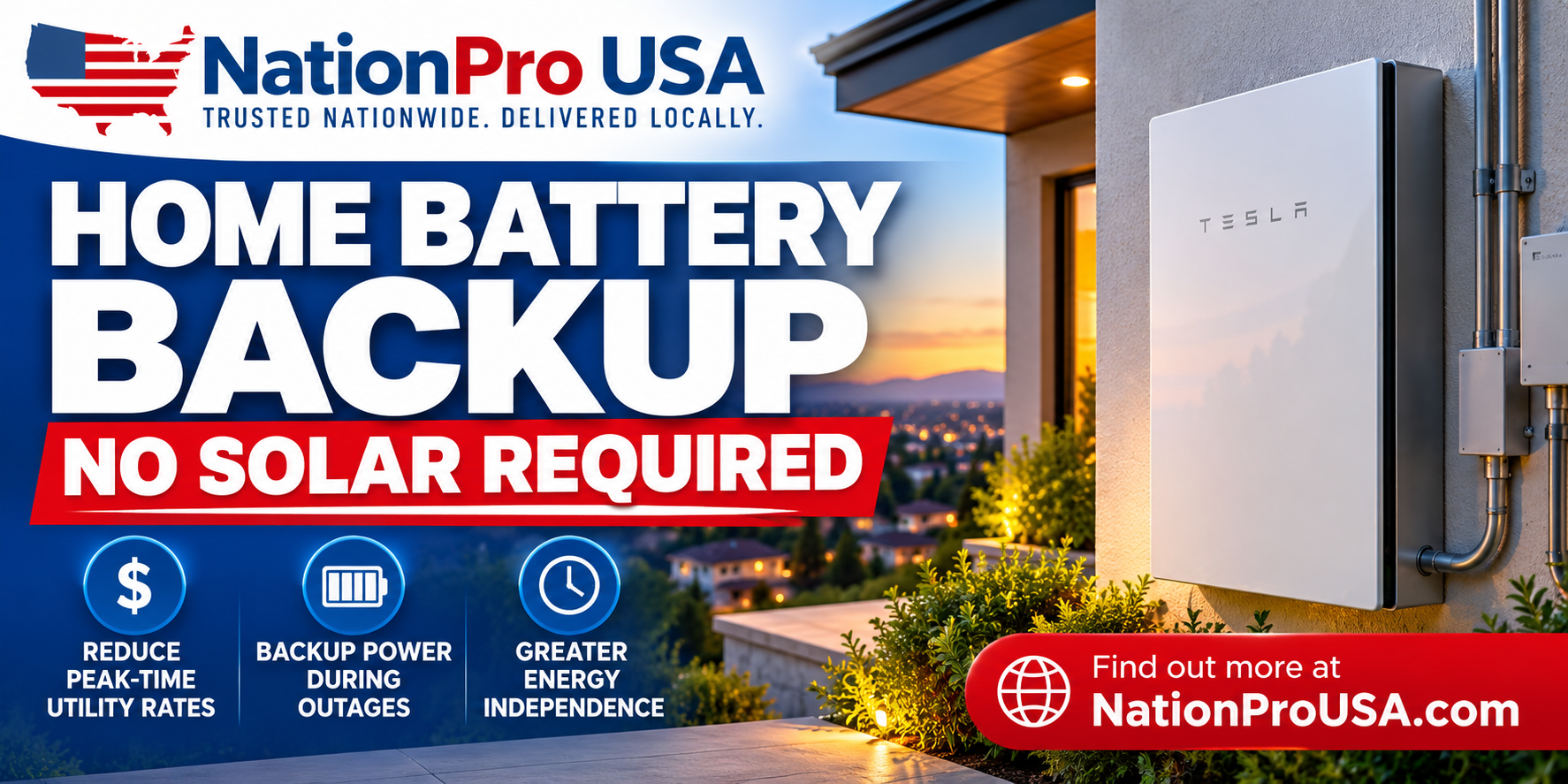


Home battery storage does not always need to begin with rooftop solar. A recent San Francisco Bay Area homeowner story shows how a battery can be used on its own to shift electricity purchases across a Time-of-Use rate and provide outage backup.
The homeowner reportedly wanted rooftop solar but said three installers declined the project because of the home's foam roof.
Instead, the homeowner installed a Tesla Powerwall 3 and began charging it from PG&E during lower-priced hours, then using stored electricity later when utility prices were higher.
This is one example of a broader battery-storage setup sometimes called load shifting or energy arbitrage.
It also shows why homeowners who cannot install solar today may still have another home-energy option.
Battery storage does not require rooftop solar in every installation. A compatible system may charge from the utility grid and discharge later, subject to the battery configuration, utility tariff, interconnection rules and installer settings.
What Happened With the Bay Area Homeowner?
The case was reported on September 27, 2026.
According to the homeowner, three solar installers said they did not have an attachment method they were willing to use on the property's foam roof.
Rather than proceed with a roof installation the homeowner was uncomfortable with, the property owner chose a leased Tesla Powerwall 3 without rooftop solar.
The homeowner said the battery charges after midnight when grid electricity is cheaper and then supplies the home later as utility pricing increases.
The homeowner also valued having battery backup available during outages.
A Foam Roof Does Not Automatically Mean Solar Is Impossible
This part of the story needs careful wording.
The homeowner reported that the three installers they contacted would not install solar on that particular foam roof.
That does not mean every foam roof is technically incapable of supporting rooftop solar.
Other installers and roofing specialists may use different mounting methods, structural designs or roofing procedures depending on the building.
Homeowners with an unusual roof should have the property reviewed by contractors who understand both the roofing system and solar mounting requirements before deciding that rooftop solar cannot be installed.
How Does a Tesla Powerwall Work Without Solar?
When Powerwall is paired with solar, available solar electricity can charge the battery.
Without rooftop solar, the battery can instead charge from the utility grid where grid charging is permitted and correctly configured.
Tesla states that when electricity rates change throughout the day, Powerwall can charge when rates are lower and discharge when electricity is more expensive.
The basic concept looks like this:
Lower-priced grid period → Battery charging → Higher-priced period → Home uses stored battery electricity
This changes when part of the household's electricity is purchased from the grid.
It does not generate electricity in the way rooftop solar does.
What Is Time-of-Use Load Shifting?
A Time-of-Use electricity rate assigns different prices to different periods of the day.
Electricity may be less expensive when grid demand is lower and more expensive during peak periods.
A home battery can potentially take advantage of that difference.
| Period | Battery Action | Household Goal |
|---|---|---|
| Lower-priced hours | Charge from grid where permitted | Store electricity for later |
| Higher-priced hours | Discharge battery | Reduce higher-priced grid purchases |
| Grid outage | Battery supplies configured backup loads | Keep selected household equipment running |
PG&E Has Rate Plans Designed Around Different Times of Day
PG&E offers several residential Time-of-Use options.
Its Electric Home E-ELEC rate uses:
- Off-peak: midnight to 3 p.m.
- Partial peak: 3 p.m. to 4 p.m. and 9 p.m. to midnight
- Peak: 4 p.m. to 9 p.m.
PG&E says homes with qualifying battery storage can be eligible for the Electric Home rate.
PG&E's EV2-A rate is another Time-of-Use plan available to qualifying customers with an electric vehicle and/or battery storage.
During summer 2026, PG&E lists EV2-A electricity at approximately 23 cents per kWh during off-peak hours and 54 cents per kWh during the 4 p.m. to 9 p.m. peak period.
That price spread illustrates why battery load shifting can be worth calculating for some households.
It does not mean every PG&E customer will save money with a battery, because eligibility, rate plans, battery losses, equipment cost and household usage all affect the result.
Is the Homeowner's “2.5 Times” Rate Difference Reasonable?
The homeowner said their peak electricity price was roughly two-and-a-half times the lower overnight rate.
That statement should be treated as the homeowner's description of their own rate situation.
Current PG&E EV2-A summer pricing provides a similar example: 54 cents per kWh during peak hours versus 23 cents during off-peak hours, or a little over 2.3 times as much.
Rate schedules can change, so homeowners should use the current tariff shown on their own PG&E account when calculating battery savings.
Does Powerwall Automatically Know When to Charge and Discharge?
Tesla's Savings mode is designed to use utility-rate information and energy forecasts when deciding how Powerwall charges and discharges.
Tesla describes the process as energy arbitrage: storing energy during lower-cost periods and using or, where allowed, exporting it when prices are higher.
Homeowners can enter a utility rate plan in the Tesla app so the system has the pricing information needed for its calculations.
Available behavior still depends on the site, utility and commissioning settings.
Grid Charging Is Not Available in Every Situation
Homeowners should not assume that every installed Powerwall can freely charge from the grid.
Tesla states that the grid-charging setting is established during commissioning and may be restricted when the utility does not permit grid charging or when a system is owned by a third party.
That means a homeowner considering battery-only storage should confirm:
- whether grid charging is permitted by the utility
- whether the selected rate plan supports the intended strategy
- whether the battery provider permits grid charging
- which operating modes will be available
- whether exporting battery energy is permitted
- which interconnection approvals are required
Can a Battery Without Solar Lower an Electric Bill?
It can in some homes, but there is no automatic savings percentage.
A battery-only system does not create electricity.
It purchases electricity from the grid, stores it and returns some of that energy later.
Because batteries have charging and discharging losses, the price difference between charging and discharging periods needs to be large enough to overcome those losses and contribute toward the cost of the battery itself.
A financial review should include:
- off-peak electricity price
- peak electricity price
- daily peak-period household usage
- battery usable capacity
- round-trip energy losses
- purchase, lease or financing cost
- rate-plan eligibility
- expected battery life
- backup value to the homeowner
A battery-only project should be calculated from the homeowner's actual rate plan. A large peak-to-off-peak price spread can improve the load-shifting calculation, but the battery still has a cost and loses some energy during each charge-and-discharge cycle.
The Homeowner Said Summer Savings Could Cover the Battery Lease
In the Bay Area case, the homeowner said they expected the electricity savings to cover the Powerwall lease payment during summer and contribute toward it during other parts of the year.
That was the homeowner's projection, not an independently audited year of battery savings.
Another household may have a very different result based on rate plan, electricity use, lease price, battery operation and location.
Backup Power May Be Just as Relevant as Utility Savings
The financial calculation is only one reason to install battery storage.
When installed with the required backup equipment, a home battery can provide stored electricity if utility power fails.
Depending on capacity and electrical configuration, battery backup may support:
- refrigerators and freezers
- lighting
- internet and Wi-Fi
- security equipment
- home-office equipment
- selected outlets
- medical devices
- selected heating or cooling equipment
Large 240-volt loads can require more battery power and energy capacity than basic household circuits.
Backup duration also depends on how much stored energy is available when the outage begins and how much electricity the household uses.
Backup Configuration Matters
Not every battery installation is configured to power a home during an outage.
Backup hardware allows the battery system to isolate the home from the utility grid and safely supply selected household loads.
Homeowners choosing a battery mainly for outage protection should confirm exactly which circuits will remain powered and for approximately how long under different usage scenarios.
Battery Without Solar vs. Solar Plus Battery
| Feature | Battery Without Solar | Solar + Battery |
|---|---|---|
| Primary charging source | Utility grid | Solar, with grid charging where available |
| Generates electricity onsite | No | Yes |
| TOU load shifting | Potentially | Potentially |
| Outage backup | Available with correct backup configuration | Available with correct backup configuration |
| Recharge during a prolonged outage | No grid source while utility power remains unavailable | Compatible solar can potentially recharge the battery during daylight |
| Reduces grid electricity purchases through onsite generation | No | Yes |
One Limitation of Battery-Only Backup: Recharging During Long Outages
A battery without solar has a finite amount of stored electricity.
Once that stored energy is used during an outage, the battery generally needs the utility grid to return before it can recharge.
A correctly configured solar-plus-battery system may be able to recharge from solar during daylight while the utility grid remains unavailable.
That difference can matter for homeowners primarily concerned about longer outages.
Could You Install Battery Storage Now and Add Solar Later?
Potentially.
A battery-first approach can work for a homeowner who wants backup protection or Time-of-Use management now but is not installing solar yet.
Future solar compatibility should be discussed during the original battery design.
The installer should review:
- future solar inverter compatibility
- electrical-panel capacity
- equipment placement
- utility interconnection requirements
- future system size
- backup architecture
NationPro USA's battery storage without solar service guide covers battery-first planning in more detail.
What If Rooftop Solar Is Not Practical Right Now?
Roof condition is only one reason a homeowner may delay solar.
Other situations can include:
- heavy shading
- limited usable roof area
- a roof approaching replacement age
- unusual roofing construction
- homeowner timing or budget
- property changes planned for the near future
In these situations, standalone battery storage may still be worth reviewing if the rate plan and backup requirements support it.
Battery Storage Does Not Mean You Are Independent From the Grid
This distinction is worth making for battery-only installations.
A standalone battery that charges from PG&E still depends on the utility as its energy source.
The battery can change when grid electricity is purchased and provide temporary power during an outage, but it does not generate new electricity.
A better description is greater control over timing and better outage resilience.
NationPro USA's California electricity-rate guide provides additional context on current utility costs.
How NationPro USA Can Help With Battery-Only Storage
A useful battery assessment starts with the home rather than the battery brand.
NationPro USA can help homeowners review:
- current utility and rate plan
- hourly electricity-use patterns
- peak-period consumption
- backup priorities
- electrical-panel configuration
- battery capacity
- grid-charging availability
- purchase or financing options
- future solar compatibility
Homeowners considering storage together with solar can also read NationPro USA's solar and battery storage guide .
Tesla Powerwall Without Solar FAQs
Can Tesla Powerwall work without solar panels?
Yes. Tesla states that Powerwall can operate without solar and, where grid charging is available, can charge when electricity prices are lower and discharge during higher-priced periods.
Can Powerwall charge from PG&E?
It can in qualifying configurations, but grid charging availability depends on utility requirements, system ownership and installer commissioning. Homeowners should confirm the setting for their specific installation.
Can a home battery lower my PG&E bill without solar?
It may in some cases by shifting electricity purchases from higher-priced periods to lower-priced periods. Savings depend on the rate-plan spread, household usage, battery losses and the cost of the battery.
What are PG&E's peak hours?
Several PG&E residential Time-of-Use plans use a 4 p.m. to 9 p.m. peak period. Exact rates and time periods depend on the customer's selected tariff.
Can battery storage provide backup without solar?
Yes, when the system includes the required backup configuration. The battery can provide stored electricity during an outage until its available energy is depleted.
Can a battery without solar recharge during a grid outage?
A standalone grid-charged battery generally cannot recharge from the utility while the grid remains down. A solar-plus-battery system may be able to recharge from compatible solar generation during daylight.
Does a foam roof mean I cannot install solar?
Not necessarily. The homeowner in this case said three installers declined their foam-roof project, but roofing systems, mounting methods and contractor capabilities differ. A roof-specific assessment is needed before ruling out solar.
Can I install a battery now and solar later?
Potentially. Future solar compatibility should be considered when the battery system is designed so electrical equipment, inverter choices and utility requirements can be planned accordingly.
Is a standalone battery the same as energy independence?
No. A battery-only system that charges from the utility still relies on the grid as its energy source. It can shift when electricity is purchased and provide temporary backup, but it does not generate electricity.
See Whether Battery Storage Can Work for Your Home Without Solar
NationPro USA can review your utility rate plan, electricity usage, outage priorities and electrical setup so you can compare standalone battery storage with solar-plus-battery options.
Get My Free Battery Storage Assessment