


Air conditioning and electric vehicle charging can push household electricity consumption substantially higher during hot Southern California summers. Recent homeowner discussions show why some families are reconsidering rooftop solar, while also raising questions about battery costs, payback periods and the differences between LADWP and SCE.
In a September 2026 online discussion, one Los Angeles Department of Water and Power customer described electricity bills that had approximately doubled after several months of air-conditioning use and EV charging.
The homeowner expected to remain in the property for another 10 to 20 years and wanted to know whether rooftop solar could make financial sense.
Other solar owners responded with personal savings reports, equipment details and advice about utility tariffs. Their comments are useful real-world examples, but they are not verified financial statements or typical outcomes.
Why Air Conditioning and EV Charging Can Raise Electric Bills
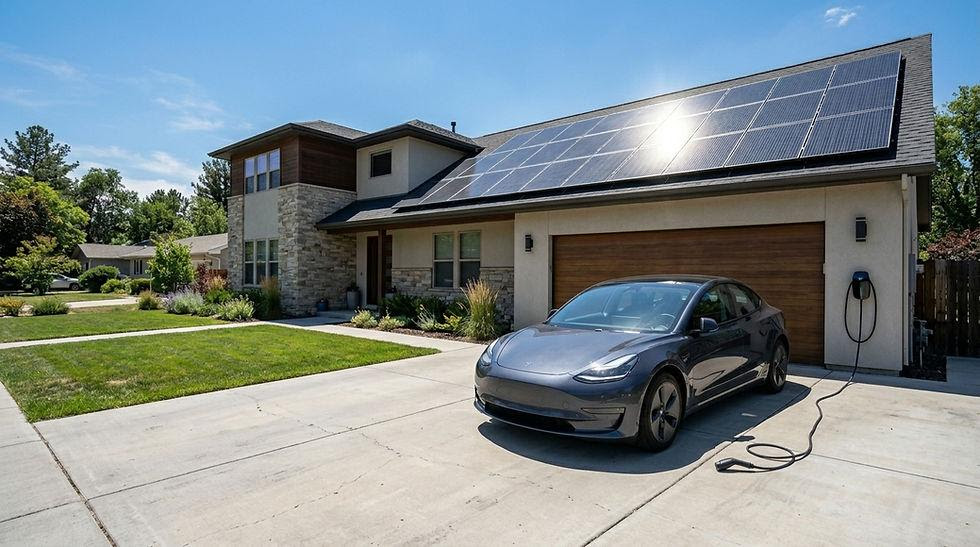
Air conditioners can represent a large share of summer electricity consumption in Southern California, particularly in inland areas where daytime temperatures stay high for extended periods.
Electric vehicles add another load.
Instead of buying gasoline, an EV owner purchases electricity to recharge the vehicle. The effect on the utility bill depends on how far the vehicle is driven, charging efficiency and the electricity rate in effect when charging occurs.
A home with multiple EVs, heavy cooling, pool equipment or other large electrical loads can use considerably more electricity than it did before those loads were added.
For homeowners receiving tiered LADWP service, greater total electricity use may also move additional consumption into higher-priced tiers.
NationPro USA explains this in more detail in its LADWP high electric bill guide .
Homeowner Story #1: Two EVs, 10 kW of Solar and Four Powerwalls
One participant in the online discussion reported operating two Tesla electric vehicles with a 10 kW rooftop solar system and four Tesla Powerwall 3 batteries.
This commenter lived in the San Francisco Bay Area and was served by PG&E, not LADWP. Their experience is relevant as a comparison, but their utility economics are different from those of the original Los Angeles homeowner.
The homeowner described a roughly four-year payback and indicated that their system had benefited from the former 30% federal homeowner solar tax credit associated with a 2025 installation.
That distinction changes how readers should interpret the result.
The system's original price, complete financial calculation, operating records and reported payback have not been independently verified. The former homeowner federal credit is also unavailable for qualifying new 2026 installations.
What this case demonstrates: High household electricity demand can create a reason to consider solar and storage. It does not establish a standard four-year payback period for Southern California homeowners in 2026.

Homeowner Story #2: Reported Annual Savings of $2,400 to $3,500
Another participant reported that their annual solar-related savings had increased over successive years.
| Year | Homeowner-Reported Savings | Status |
|---|---|---|
| 2024 | $2,400 | Reported historical amount |
| 2025 | $2,900 | Reported historical amount |
| 2026 | Approximately $3,500 | Homeowner's projection |
The commenter indicated that their savings calculation accounted for battery storage. However, the calculation method, battery financing, baseline utility costs and full ownership expenses were not independently verified.
The 2026 figure is a projection, not a confirmed year-end result.
For a simple illustration, $3,500 per year sustained for ten years would total $35,000 in gross estimated savings. That arithmetic should not be confused with net investment return because ongoing system costs, financing and changes in performance have not been included.
A more useful approach is to evaluate what the system costs, how much grid electricity it replaces and what the homeowner continues to pay after installation.
Solar-Only vs. Solar Plus Battery: Which Is Better for LADWP Homes?
LADWP customers should not automatically use the same battery-sizing or solar-export assumptions as Southern California Edison or PG&E customers.
LADWP operates its own Net Energy Metering program. Under its published NEM guidelines, qualifying customers are billed based on applicable net electricity usage, with credit carryforward provisions subject to LADWP's program rules.
That can make a solar-only system a reasonable option to compare before adding the cost of storage.
| Consideration | Solar Only | Solar + Battery |
|---|---|---|
| Electricity generation | Produces electricity during daylight | Produces and stores available solar electricity |
| Upfront system cost | Generally lower | Higher due to storage and related equipment |
| After-sunset energy use | Normally relies on grid electricity | Can use stored energy when available |
| Outage backup | Standard grid-connected systems generally shut down | Supported loads can receive backup with suitable configuration |
| Financial outcome | Depends on solar cost, usage and billing rules | Also depends on incremental battery cost and operation |
Battery storage may still be useful for LADWP customers who place a high value on outage protection.
The decision should separate the value of electricity-bill management from the value of backup power.
Read NationPro USA's home battery storage and solar guide for further information.
Why SCE Homeowners Have a Different Battery Calculation
New qualifying Southern California Edison rooftop solar customers generally operate under California's Net Billing Tariff, also known as the Solar Billing Plan.
Under this structure, exported solar electricity receives compensation based on the applicable export-credit schedule rather than being universally credited at the same retail rate charged for imported electricity.
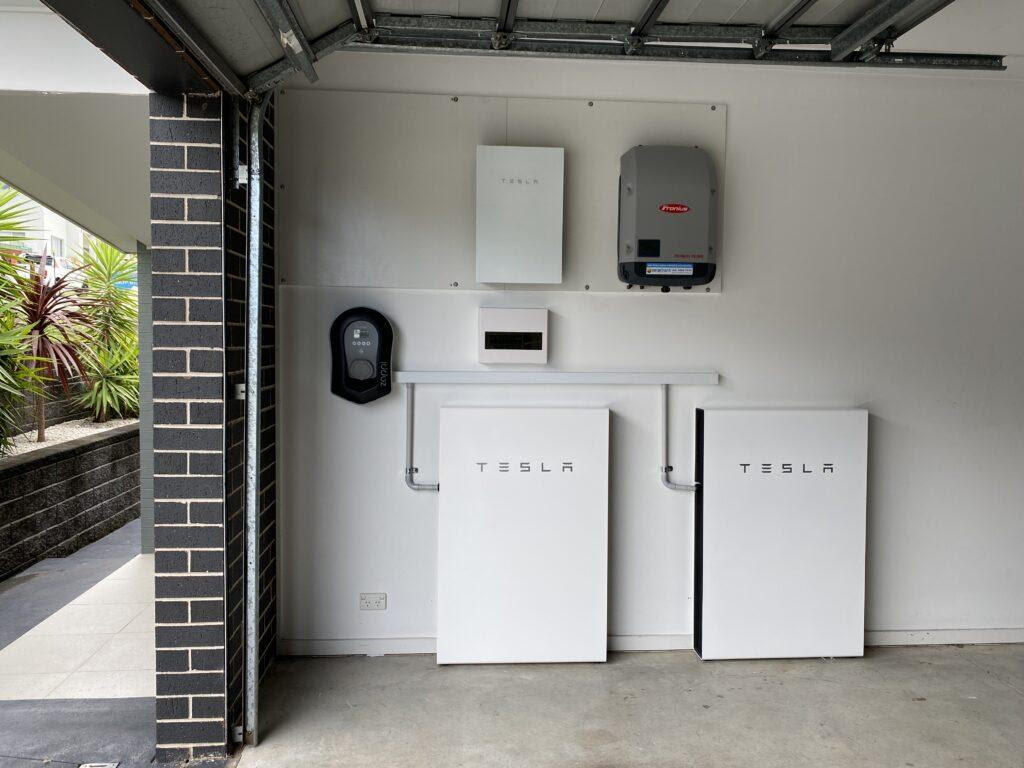
Battery storage can allow a household to keep some daytime solar generation for later use during higher-priced periods.
That can improve the value of self-consumption in certain situations, but the extra benefit still needs to be compared against battery equipment, installation and financing costs.
Know your utility before comparing proposals. LADWP's municipal solar program and SCE's Net Billing Tariff are not interchangeable. The same solar and battery configuration can produce different financial results under different tariffs.
How Much Electricity Does an EV Add to Your Home?
An electric vehicle can add thousands of kilowatt-hours of electricity demand each year, depending on annual mileage and efficiency.
Consider a hypothetical EV driven 12,000 miles per year with an average vehicle efficiency of 3 miles per kilowatt-hour.
The estimated vehicle energy consumption is:
12,000 miles ÷ 3 miles/kWh = 4,000 kWh per year
Electricity purchased for home charging can be higher once charging losses are included.
Actual EV efficiency differs by vehicle and driving conditions. The U.S. Department of Energy reports substantial variation between electric cars and larger SUVs.
What Could 4,000 kWh of EV Electricity Cost?
At an illustrative electricity price of $0.30 per kWh, 4,000 kWh of vehicle energy would represent $1,200 of electricity value before charging losses.
The following examples show the gross value of avoiding grid purchases when a portion of that energy is supplied directly by available rooftop solar.
| Solar-Supplied Share | Illustrative Grid kWh Avoided | Gross Avoided Cost at $0.30/kWh |
|---|---|---|
| 25% | 1,000 kWh | $300/year |
| 50% | 2,000 kWh | $600/year |
| 75% | 3,000 kWh | $900/year |
Purely illustrative figures. This table assumes the stated amount of electricity is used directly instead of being purchased at a hypothetical flat rate of $0.30/kWh. It excludes solar capital cost, financing, charging losses, tariff timing, export-credit opportunity cost and remaining utility charges. It is not a solar savings quote.
Can Solar Panels Charge an EV Directly?
Yes. When an EV is charging while rooftop solar is generating electricity, available solar output can supply some or all of the charging demand, depending on the vehicle charger and other household electrical loads.
But many homeowners charge their vehicles overnight after returning from work. Rooftop panels do not generate electricity at night.
In that case, the vehicle generally uses grid electricity unless another stored energy source is available.
A battery can change that operating pattern, but homeowners should compare storing solar for evening household use against the cost of charging the EV from an available off-peak electricity tariff.
NationPro USA covers EV charging strategies in its California solar and EV charging guide .
Long-Term Homeownership Can Change Solar Economics
The homeowner who started the LADWP discussion expected to remain in the property for approximately 10 to 20 years.
That makes the length of homeownership part of the solar financial decision.
A homeowner who expects to stay for many years can evaluate the system over a longer period, while a homeowner planning to sell soon may place more weight on financing, resale and contract-transfer requirements.
Solar panels commonly have long manufacturer performance warranties, but warranty duration does not guarantee electricity production, annual savings or a financial payback date.
In addition, the former federal homeowner Section 25D solar credit ended for qualifying new installations after December 31, 2025. New 2026 quotes should not assume that credit is available.
For more detail, read NationPro's California solar guide after the federal tax credit .
Before Installing Solar, Review Your AC and EV Electricity Use
A system designed only around a recent summer electricity bill may be poorly matched to annual consumption or future charging needs.
The better starting point is a full-year household energy review whenever data is available.
Check 12 Months of Usage
Review monthly kWh consumption and, where available, interval data such as Green Button energy records.
Measure Cooling Demand
Compare summer consumption with other seasons, and review HVAC efficiency, insulation and major electrical loads.
Include Current and Future EVs
Estimate each vehicle's annual driving, energy use and likely home-charging schedule before selecting the solar system size.
Compare Solar With and Without Storage
Model the actual utility tariff, expected generation, remaining grid purchases, battery costs and outage priorities.
Solar can change how much energy the home purchases from the grid. Efficiency improvements can change how much electricity the home needs in the first place.
Both should be considered together. NationPro USA's California home energy efficiency guide covers related improvements.
What These Homeowner Stories Really Show
The online discussion does not establish one standard California solar savings figure.
It shows that homeowners with substantial cooling and EV charging needs are asking more detailed financial questions about rooftop solar.
Some owners report attractive outcomes, while the actual value of solar depends on installation timing, previous incentives, utility rates, electricity consumption and project cost.
The best way to evaluate a new 2026 installation is to compare the homeowner's actual utility data with a detailed solar production estimate and complete project pricing.
NationPro USA can help homeowners compare solar-only and solar-plus-battery options based on their energy needs and financial goals.
Solar for Air Conditioning and EV Charging FAQs
Can solar panels reduce air conditioning and EV charging costs?
Yes. Solar electricity used directly by the home can reduce electricity purchased from the utility for air conditioning, EV charging and other electrical loads. Actual financial savings depend on solar production, utility rates, charging schedules, system costs and financing.
Is solar worth it for a household with two electric vehicles?
It can be. Two EVs can increase household electricity demand, creating a larger load that solar may help serve. The financial result depends on each vehicle's mileage, charging times, the utility tariff, roof production and the installed solar price.
Did an LADWP homeowner report a four-year solar payback with four Powerwalls?
The four-year payback claim came from a Bay Area PG&E customer responding to an LADWP homeowner's question. The commenter reported a 10 kW solar system, four Powerwall 3 batteries and an installation that benefited from the former federal homeowner tax credit. The result was not independently verified.
How much electricity does an EV use in a year?
As an example, an EV driven 12,000 miles annually at an average efficiency of 3 miles per kWh uses approximately 4,000 kWh for vehicle operation before charging losses. Actual energy use varies by vehicle, driving conditions and mileage.
Is solar-only or solar plus battery better for LADWP customers?
Neither option is automatically better. LADWP maintains its own net metering arrangements, so solar-only may be economical for some households. Batteries add cost but may provide backup power and additional flexibility. Both options should be compared using the customer's actual rate plan and priorities.
Why is battery storage different for SCE customers?
New qualifying SCE solar customers generally use California's Net Billing Tariff. Because solar export credits differ from the retail cost of imported electricity, storing daytime solar for later household use may be useful. The financial benefit still depends on battery costs and operating conditions.
Can solar charge an electric vehicle at night?
Rooftop solar does not generate electricity at night. Overnight EV charging generally uses utility electricity unless a compatible stored-energy source is available. Time-of-Use plans may offer lower-priced overnight charging.
What should I review before sizing solar for air conditioning and EV charging?
Review at least 12 months of electricity usage when available, cooling demand, EV mileage, expected charging schedules, roof production, utility rate plans, future electrical loads, battery requirements and the total installed system cost.
Is the federal 30% homeowner solar tax credit available for new 2026 installations?
No. The federal Residential Clean Energy Credit under Section 25D is unavailable for qualifying new homeowner solar installations completed after December 31, 2025.
Find Out What Solar Could Do for Your AC and EV Charging Costs
NationPro USA can help compare your household electricity use, EV charging needs, solar production potential, utility rates and battery options to estimate whether a system makes sense for your home.
Get My Free Solar Savings Assessment