



A NationPro USA Guide to Maximizing Your Solar Investment
For today’s homeowners, going solar is no longer just about reducing your environmental impact—it’s about protecting yourself from rising utility rates, increasing your home’s value, and creating long-term financial savings.
A properly designed solar energy system can save tens of thousands of dollars over its lifetime. However, making the wrong decisions before installation can significantly reduce those savings and, in some cases, cost homeowners thousands.
At NationPro USA, we’ve helped homeowners navigate the transition to clean energy by focusing on education first. Here are the 10 biggest mistakes homeowners should avoid when investing in solar.
1. Waiting for the "Perfect Time"
Many homeowners continue waiting because they believe prices will drop or newer technology is just around the corner.
The reality?
Every month you wait is another month of paying an electric company for power your roof could have generated for you.
With electricity rates continuing to climb across much of the country—especially in California—the cost of delaying often outweighs any future equipment improvements.
NationPro Tip: The best time to install solar is usually before your next utility rate increase—not after it.
2. Choosing the Lowest Price Instead of the Best Value
Solar isn’t a commodity.
Two systems that look identical on paper may have dramatically different:
- Panel quality
- Inverter technology
- Battery compatibility
- Production guarantees
- Installation workmanship
- Equipment warranties
The cheapest proposal can become the most expensive over the next 25 years if performance suffers.
NationPro Tip: Compare lifetime savings—not just installation cost.
3. Skipping Battery Storage
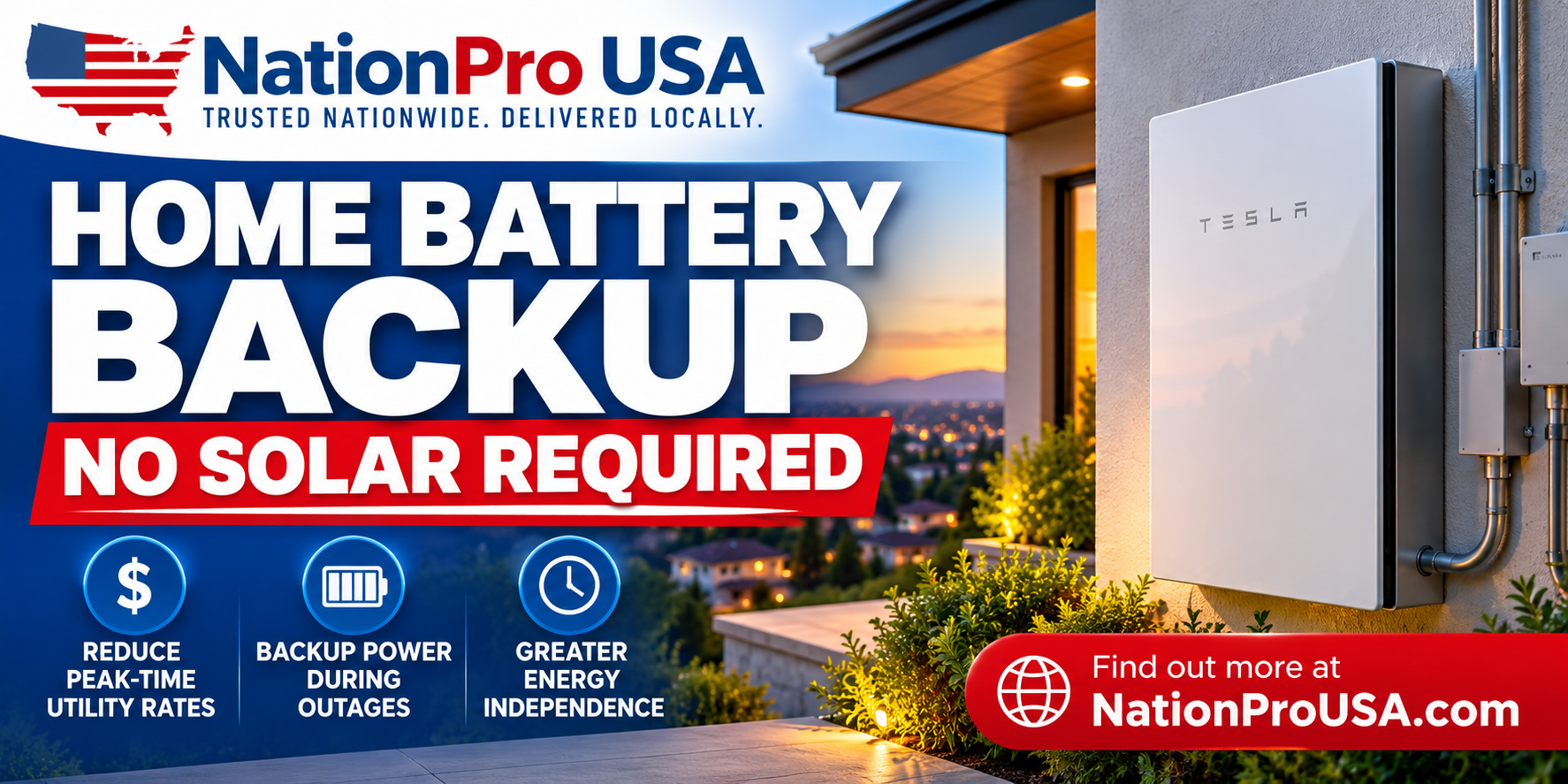
Modern battery systems do far more than provide backup power.
They help homeowners:
- Store excess daytime solar production
- Reduce expensive evening utility purchases
- Increase energy independence
- Protect against power outages
- Participate in Virtual Power Plant (VPP) programs where available
As utility companies continue reducing compensation for exported solar energy, batteries have become one of the smartest additions to a residential solar system.
4. Believing Your Area Doesn't Get Enough Sun
One of the biggest misconceptions about solar is that it only works in hot, sunny climates.
Solar panels generate electricity from daylight—not heat.
Even cloudy regions produce substantial solar energy throughout the year.
Many states with moderate weather continue to experience strong solar production because modern panels perform efficiently under a wide range of conditions.
5. Installing the Wrong Size System
System sizing is critical.
An undersized system leaves money on the table because you’ll continue purchasing more electricity from the utility.
An oversized system may cost more than necessary and generate excess electricity that provides limited financial value.
The ideal system is designed around:
- Current electricity usage
- Future utility rate increases
- Household lifestyle
- Available roof space
- Long-term energy goals
6. Forgetting About Future Electricity Needs
Today’s energy usage may look very different just a few years from now.
Many homeowners eventually add:
- Electric vehicles
- Electric heat pumps
- Home battery storage
- Home offices
- Air conditioning
- Pool equipment
Each increases electricity consumption.
Planning ahead allows your solar system to accommodate tomorrow’s energy demands—not just today’s.
7. Choosing an Inexperienced Installer
Your installer is just as important as the equipment itself.
An experienced installation company should provide:
- Professional system design
- High-quality equipment
- Strong manufacturer warranties
- Monitoring and support
- Proper permitting
- Ongoing customer service
Solar is a 25- to 30-year investment. Make sure your installer plans to be there long after installation day.
8. Looking Only at Installation Cost
Many homeowners focus entirely on the purchase price.
A better question is:
“What will this system save me over the next 25 years?”
When evaluating proposals, consider:
- Lifetime production
- Warranty coverage
- Equipment reliability
- Maintenance requirements
- Battery compatibility
- Long-term utility savings
The lowest upfront cost doesn’t always deliver the highest return on investment.
9. Not Changing Energy Habits
Solar becomes even more valuable when homeowners adjust when they use electricity.
Examples include:
- Running dishwashers during daylight hours
- Charging electric vehicles while the sun is shining
- Doing laundry during peak solar production
- Scheduling pool pumps during the day
Small behavioral changes can significantly increase your solar savings.
10. Thinking Solar Is Only About Helping the Environment
Environmental benefits remain important.
But today’s homeowners increasingly choose solar because it offers:
- Lower monthly energy costs
- Protection from rising utility rates
- Greater energy independence
- Backup power during outages
- Increased home value
- Predictable long-term energy expenses
For many families, solar has become one of the few home improvements that can continue generating financial returns every day after installation.
Solar Is an Investment—Not Just a Home Improvement
Unlike a remodeled kitchen or new flooring, a properly designed solar energy system has the potential to produce value every day by reducing your dependence on the electric utility.
When combined with battery storage, homeowners gain even greater control over how and when they use electricity while improving resilience during outages.
The key is making informed decisions before installation—not simply selecting the lowest bid.
Why Homeowners Are Thinking Differently About Solar
The conversation has changed dramatically over the past few years.
Instead of asking:
- “Does solar really work?”
Homeowners are now asking:
- How much can I save?
- Should I install battery storage?
- Can solar power my electric vehicle?
- Will it support an electric heat pump?
- How much of my utility bill can I eliminate?
Those are the right questions—and they all begin with a properly designed system tailored to your home’s current and future energy needs.
The NationPro USA Difference
At NationPro USA, we believe the best solar investment starts with education—not a sales pitch.
Our energy consultants evaluate your home’s energy usage, future plans, utility rates, and available incentives to design a system that maximizes long-term value—not simply the lowest installation price.
Whether you’re considering solar panels, battery storage, electric heat pumps, or a complete home energy solution, our goal is to help you make a smart financial decision that continues paying dividends for decades.
Ready to Find Out How Much You Could Save?
Contact NationPro USA today for a complimentary energy consultation and personalized savings analysis. We’ll show you how the right solar solution can help reduce your monthly energy costs, increase your energy independence, and protect your household from rising electricity prices for years to come.