


A NationPro USA Insight Into Rising Electricity Costs and How Californians Can Take Back Control
California homeowners have watched their electric bills climb year after year, often with little explanation beyond another utility rate increase. While inflation and growing electricity demand certainly play a role, one of the biggest reasons behind California’s soaring utility costs is something far more specific: wildfire mitigation spending.
After devastating utility-caused wildfires in 2017 and 2018, California embarked on one of the most aggressive electric grid safety programs in the nation. The goal was essential—prevent future disasters—but the cost has largely fallen on homeowners through higher monthly electric bills.
The question now isn’t whether California should continue protecting communities from wildfire risk. The question is how to do it more efficiently while keeping electricity affordable.
Wildfire Prevention Has Become One of the Largest Drivers of Utility Bills
Following the catastrophic fires, California regulators authorized investor-owned utilities—including PG&E, Southern California Edison, and SDG&E—to recover approximately $27 billion in wildfire-related expenses through customer rates.
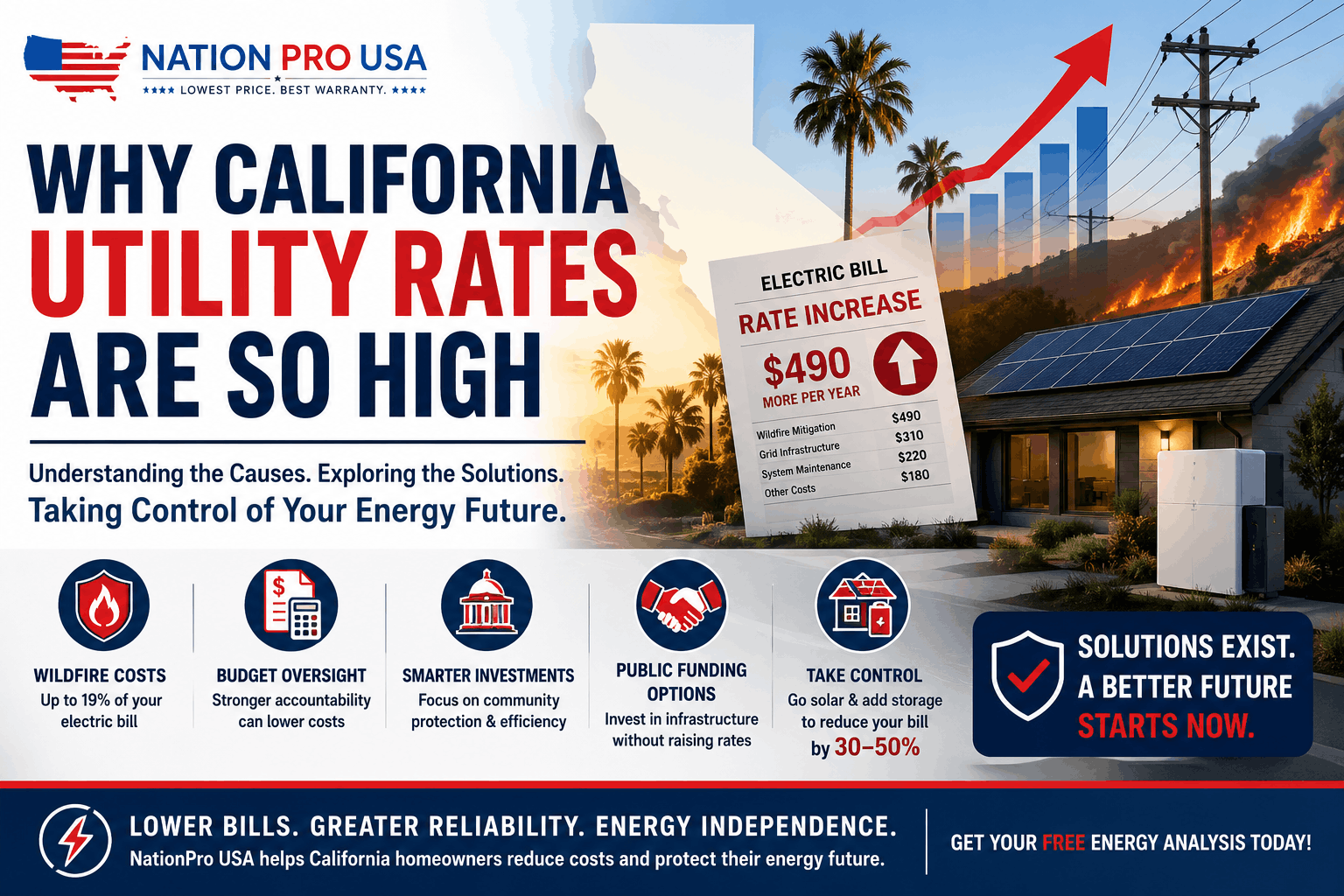
Today, wildfire mitigation can account for up to 19% of the average residential electric bill, adding as much as $490 per year for many homeowners.
That includes investments such as:
- Undergrounding power lines
- Enhanced vegetation management
- Grid monitoring technology
- Pole and equipment upgrades
- Expanded inspection programs
- Fire detection systems
These projects unquestionably improve safety—but they also come with enormous price tags.
California May Need to Shift From Spending More to Spending Smarter
California has developed one of the nation’s most sophisticated wildfire mitigation strategies. The next challenge is ensuring that every dollar delivers the greatest possible benefit.
Several ideas have been proposed that could reduce future rate pressure while maintaining public safety.
Lower Utility Profit Margins on Wildfire Projects
Investor-owned utilities earn regulated returns on many capital improvement projects.
Some policymakers have suggested lowering the allowable return specifically for wildfire mitigation investments, arguing that these projects also reduce utilities’ financial exposure to wildfire liability. Lower profits on these projects could reduce costs passed on to customers while still allowing utilities to make critical safety investments.
Invest More in Protecting Communities
Instead of concentrating nearly all spending on preventing every possible ignition across thousands of miles of power lines, California could dedicate more resources toward protecting high-risk communities.
Examples include:
- Community fire hardening
- Improved evacuation infrastructure
- Defensible space programs
- Local wildfire resilience projects
- Strategic vegetation management
This balanced approach could potentially deliver greater public safety at a lower long-term cost.
Utilities Need Stronger Budget Accountability
California utilities file a General Rate Case approximately every four years.
The purpose is straightforward:
Regulators establish a multi-year operating budget, encouraging utilities to complete projects efficiently.
However, over time, hundreds of special accounting mechanisms have allowed utilities to recover additional costs outside of these approved budgets.
These “tracking accounts” cover expenses ranging from tree trimming to nuclear decommissioning and many other programs.
While originally intended for exceptional circumstances, they have increasingly become routine methods of passing additional costs directly to customers.
Many policy experts believe reducing the use of these special accounts would restore stronger financial discipline and help control future rate increases.
Grid Modernization Doesn't Always Have to Be Paid Through Utility Bills
Wildfire spending isn’t the only reason electric rates continue climbing.
California’s investment in:
- Distribution lines
- Transformers
- Substations
- Grid modernization
- Repair crews
- System reliability improvements
has increased dramatically over the past decade.
One alternative is expanding the use of:
- State funding
- Federal infrastructure grants
- Public-private partnerships
Rather than placing every infrastructure investment directly into utility rates, some projects could be financed through broader public funding mechanisms that distribute costs more equitably.
Rising Demand Is Adding Even More Pressure
California’s electrical system is also experiencing unprecedented demand from:
- Electric vehicles
- Home electrification
- AI data centers
- Population growth
- Increased air conditioning usage during extreme heat
Meeting this demand requires billions of dollars in additional infrastructure investment, creating even more upward pressure on utility rates.
Without reforms to how these investments are funded and managed, homeowners are likely to continue seeing electricity costs rise.
What Homeowners Can Do Right Now
While policymakers work toward long-term solutions, homeowners still have options to reduce their exposure to rising utility costs.
Installing a properly designed solar energy system can allow homeowners to generate much of their own electricity rather than purchasing it from the utility at continually increasing rates.
Adding battery storage provides additional benefits by allowing excess solar energy to be stored and used during peak-rate periods, evenings, or power outages. In some areas, batteries can also participate in Virtual Power Plant (VPP) programs, creating additional value for homeowners while helping support the grid.
The goal isn’t simply producing clean energy—it’s gaining greater control over one of the fastest-growing household expenses.
The Bottom Line
California’s high electricity rates are the result of multiple converging factors, including wildfire mitigation, aging infrastructure, grid modernization, and increasing electricity demand. While protecting communities and maintaining a reliable electric grid remain essential priorities, many experts believe there are opportunities to improve efficiency, strengthen budget oversight, and diversify how major infrastructure projects are funded.
For homeowners, the reality is that utility costs are likely to remain elevated for the foreseeable future. That makes reducing dependence on rising utility rates one of the most practical financial decisions many families can make.
At NationPro USA, we help California homeowners understand their energy options and identify solutions that can reduce monthly electricity costs, improve energy resilience, and provide greater long-term predictability in an environment of continually changing utility rates.
About NationPro USA
NationPro USA helps homeowners throughout California lower monthly energy costs through customized residential solar and battery storage solutions. Our team works with homeowners to evaluate their current utility usage, compare available energy programs, and identify options that can reduce electricity costs by 30–50% while providing greater protection against future utility rate increases.